Quick answer
Cerlox is plastic comb binding that works well for spec books, tender sets, and office manuals when you want pages that flip easily and stay organised. It’s a solid choice for internal packages and site binders that do not need a premium book look. For a fast quote, send one PDF, page count, size, black and white or colour pages, number of sets, cover preference, and your pickup location in Hamilton or Burlington.
Request a quote | Upload files | Call
Need general binding options first? See Binding. For file setup, use File Preparation. If you’re coordinating full print packages, browse Our Services or Contact.
What is cerlox binding
Cerlox is a plastic comb binding that uses a comb spine to hold pages together through a row of punched holes. It’s commonly used for spec books, tender sets, and office manuals because it’s practical and easy to handle.
Why it’s so common for spec books and tender sets
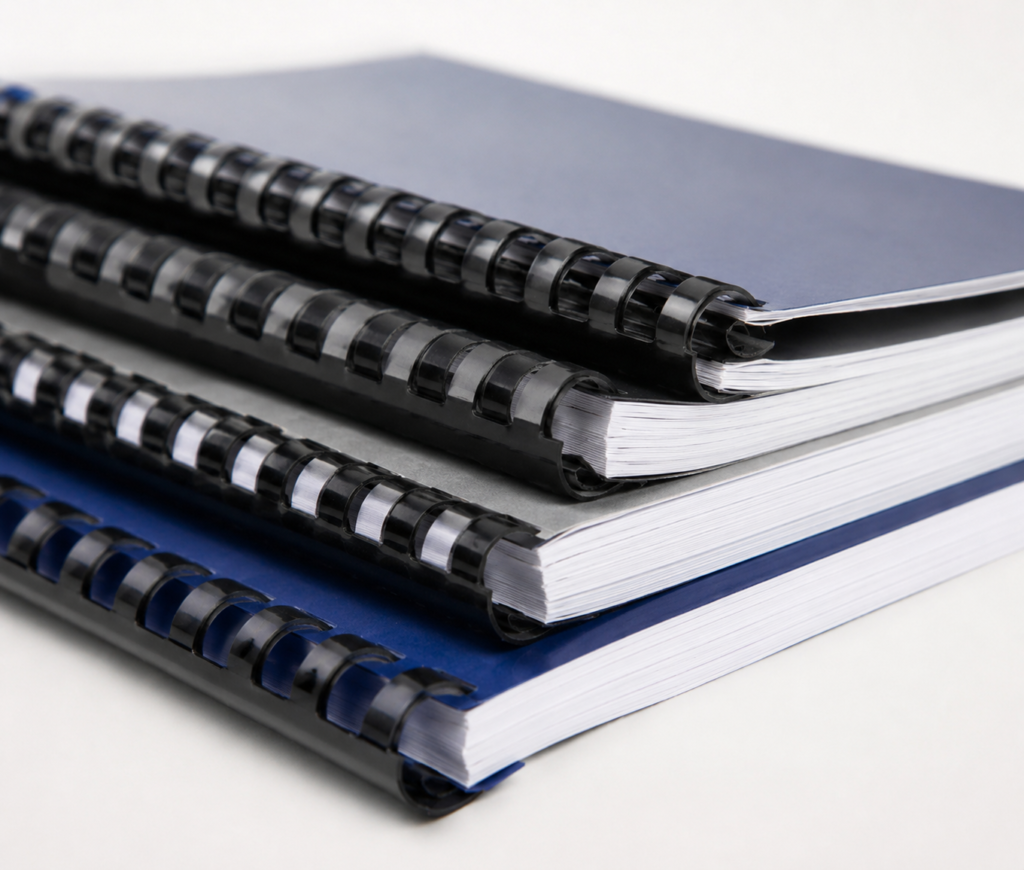
Cerlox is popular when you need multiple sets bound quickly and consistently. It keeps sections together, makes it easy to label the spine, and helps prevent loose pages getting mixed up between revisions.
If you’re producing construction packages alongside drawings, you may also want to reference your related service pages like Architectural and construction Printing for documents and Large Format Printing for plan sets.
What it looks like and how it behaves when opened
Cerlox typically opens like a report or manual. Pages can be turned easily and the book stays manageable on a desk. It’s not meant to look like a bookstore spine, but it is meant to be readable, organised, and easy to re handle.
If your PDF is not print ready or your sections need cleanup, check File Preparation first. If you need layout help or fixes to headers, tables, or page numbering, Graphic Design is the right place to start.
When cerlox is the best choice for spec books
Cerlox is usually the best pick when the goal is a clean, functional spec book that can be produced and distributed without fuss.
Tender sets and internal packages
Tender sets often need multiple identical sets that are easy to review and keep in order. Cerlox suits this well because it stays neat, flips easily, and feels like a standard format many offices already expect.
If you’re building full tender packages, it’s also helpful to know what finishing options exist across your print work. The Binding page is a good reference point.
Office copies and site binders
For office copies and site binders, cerlox is a practical middle ground. It’s tidy enough for internal review and durable enough for normal handling. Many teams keep a few bound sets on hand for meetings, site coordination, and markups.
If you’re coordinating multiple sets per project and want them grouped by site, phase, or address, you can also look at Kitting for bundling and organisation.
When you need fast binding and easy handling
Cerlox is a go to when speed and simplicity matter. It’s straightforward for readers, easy to stack, and easy to store. It also makes it simple to keep the project organised when you’re dealing with revisions and multiple stakeholders.
When you don’t need a premium book look
If the spec book is primarily for working use rather than presentation, cerlox is often the right tool. For client facing, “finished book” style documents, other binding styles may be a better match, and we’ll cover that later in the guide.
Request a quote | Upload files | Call
When you should choose a different binding
Cerlox is a strong default for many spec books, but it is not always the best fit. If your set will be handled heavily, is very thick, or needs a polished “finished book” look, another binding style can make life easier.
Heavy daily site use
If a spec book will be opened and closed all day, every day, durability and easy page turning matter more. In those cases, coil binding can hold up well and tends to lay flatter on a table.
You can compare options on Binding, or if you are printing other site materials at the same time, start at Our Services.
Very thick books
As books get thicker, they become bulkier to handle and the spine choice matters more. At some point, it can be more practical to split the set into volumes or switch to another binding style that suits thicker documents.
If you are unsure, share the page count and paper type when you Request a quote and you will get a clear recommendation.
When you need a finished presentation look
For client facing copies, proposal packages, or anything that needs a clean spine and a more “book” appearance, perfect binding is often considered. It looks more like a published book and can be easier to label for shelves.
If you need layout clean up, section dividers, or a more polished cover, Graphic Design can help.
Low page count booklets
If the page count is low and the document is more like a booklet than a manual, saddle stitch can be simpler and cleaner. It also keeps the package light and easy to hand out.
Cerlox page count guide
There is no single max page count that applies to every job, because paper thickness and inserts change the final bulk. The best approach is to think in practical ranges and match the binding to how the book will be used.
Under 40 pages
Cerlox can work, but it may be more binding than you actually need. If the book is meant to be handed out or read once, a booklet style bind is often simpler.
If the pages will be referenced repeatedly, cerlox can still be a good fit, especially if you want it to look consistent with other project binders.
40 to 120 pages
This is the sweet spot for many spec books and tender sets. It stays easy to flip, easy to label, and straightforward to produce in multiple sets.
It also tends to be a comfortable thickness for office handling without feeling bulky.
120 to 250 pages
This range can still work depending on paper thickness and whether you are printing single sided or double sided. As the book gets thicker, it becomes more important to confirm the best spine size and whether splitting into volumes will make it easier to use.
If the set is for site use, this is also where you may want to consider coil or splitting into two binders for durability and usability.
250 plus pages
At this point, splitting into multiple volumes is often easier for handling, storage, and day to day use. It also reduces the risk of damage from constant opening and transport.
If you want a quick recommendation, send your PDF and page count and we will suggest the cleanest approach.
Quick reference table
| Page range | Cerlox fit | Other options to consider |
|---|---|---|
| Under 40 | Sometimes overkill | Saddle stitch for booklet style use |
| 40 to 120 | Great fit | Cerlox is often the easiest choice |
| 120 to 250 | Depends on thickness | Coil, or split into volumes |
| 250 plus | Usually not ideal | Split into volumes, or consider another style |
Before you upload your file, check File Preparation so page order, fonts, and sizes do not cause delays.
Request a quote | Upload files | Call
Paper, covers, and finishing options that matter
The binding is only part of what makes a spec book easy to use. Paper choice, covers, and a few finishing details can affect thickness, readability, and how well the book holds up in the office or on site.
Clear front cover and heavier back cover
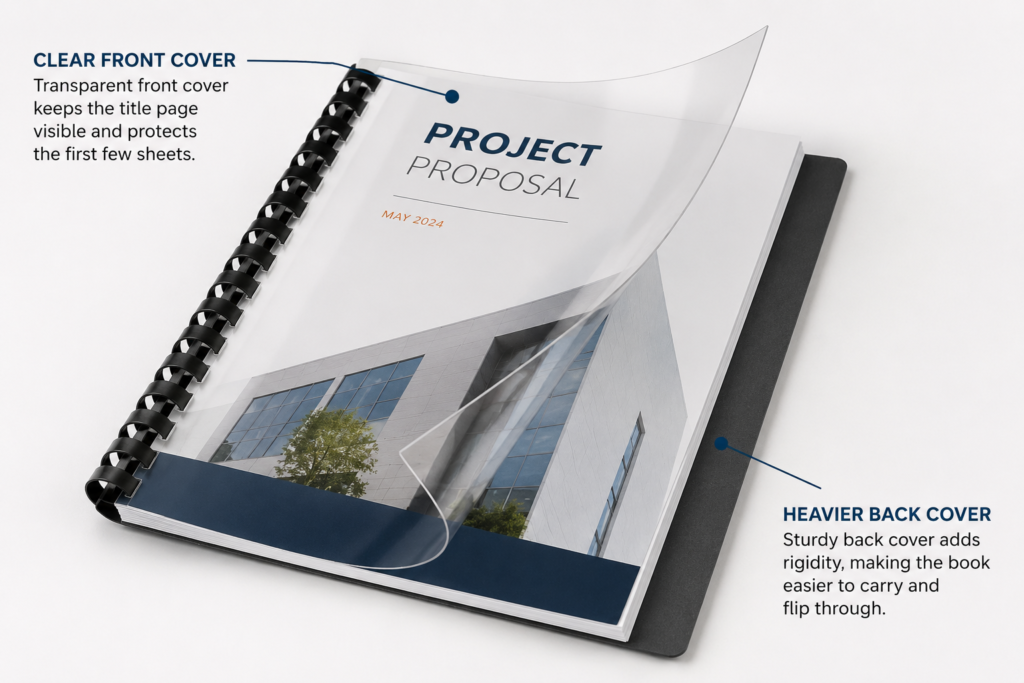
A clear front cover makes the title page visible and helps protect the first few sheets. A heavier back cover adds stiffness, which makes the book easier to carry and flip through.
If you’re not sure what cover style to choose, mention whether the set is for office review, client distribution, or site use when you Request a quote.
Tabs and dividers for spec sections
Dividers can make long spec books much easier to navigate, especially when multiple people are referencing the same set. If you want tabs or dividers, the important part is being clear about:
- how many sections you need
- the section titles
- where each divider should appear
If your PDF already includes divider pages, that’s fine. Just make sure everything is in one file and in the correct order. File Preparation helps avoid common setup issues.
Single sided vs double sided
Double sided printing can reduce bulk and make thicker books more manageable. Single sided can be easier for markups in some workflows and can reduce show through on thinner paper.
If you are deciding, think about how the book will be used:
- heavy reviewing and note taking
- quick reference on site
- archiving in the office
When you send your details, note your preference and your page count so the best approach can be confirmed.
Collating and multiple sets
Spec books are often ordered in multiple sets for different stakeholders. If you need multiple identical sets, send the number of sets and confirm whether you need any special grouping or labelling.
If you want sets bundled by building, phase, or recipient, Kitting is relevant.
For an overview of finishing options beyond cerlox, see Binding.
Common mistakes that slow down spec book printing
Most delays are not printing delays. They are file and version issues. A few simple habits can prevent last minute confusion.
PDF not merged properly
The most common issue is sending sections as separate files or forgetting pages during merging. For a fast turnaround, send one PDF with the final page order.
If you have multiple volumes, label them clearly and keep each volume as a separate PDF.
Wrong page order
Spec books often have front matter, sections, appendices, and addenda. One missing page or swapped section creates rework. Before you upload, scroll through your PDF and confirm the order is final.
Mixed paper sizes without notes
Mixing letter and legal pages can be fine, but it must be clearly noted. If the file includes mixed sizes, include a short note in your email so it can be checked before printing.
Missing divider instructions
If you want dividers, do not assume the printer will guess your section breaks. Include divider pages in your PDF or write clear instructions with exact page numbers.
Last minute changes without version naming
Version control is a real problem on tenders. Use simple naming like:
- ProjectName Spec Book v3 FINAL
- ProjectName Addenda v1
This reduces the risk of printing the wrong file when multiple people are sending updates.
For a full checklist, use File Preparation.
Request a quote | Upload files | Call
Cerlox vs coil vs perfect vs saddle stitch
If you’re choosing a binding style for spec books, the easiest way is to match the binding to how the document will be used.
Cerlox
Cerlox is office friendly and practical. It’s often chosen when you need multiple sets, fast handling, and a clean, simple finish.
Coil
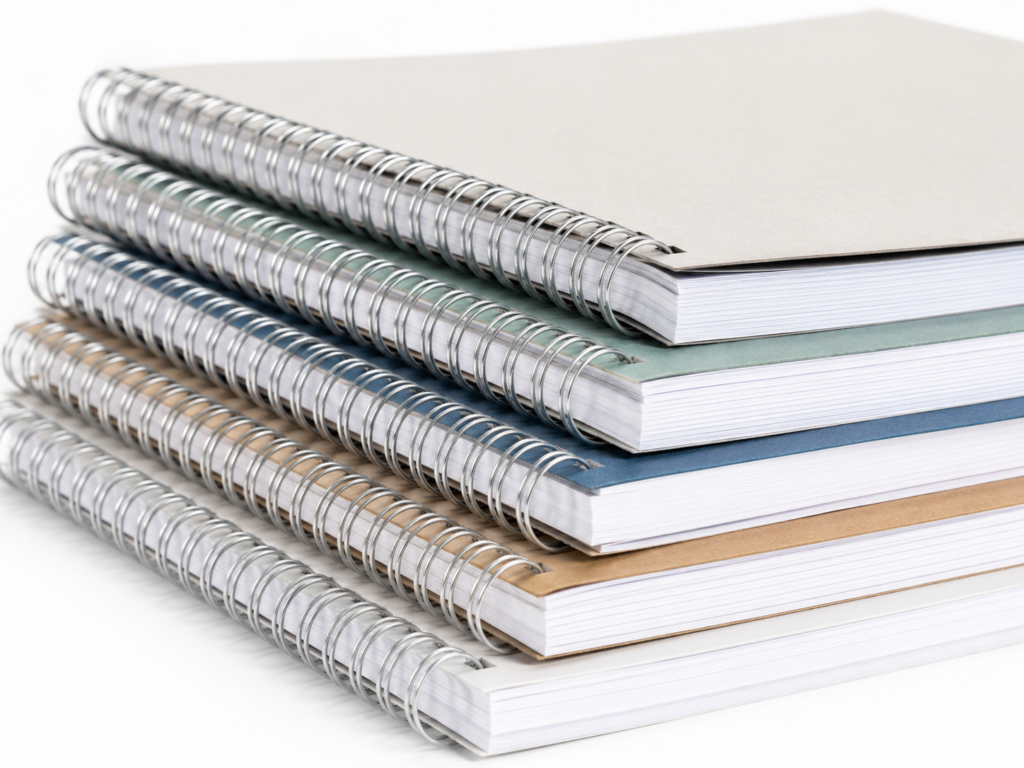
Coil is a good option when durability and lay flat use matter most, especially for heavy handling. It’s commonly considered for site binders that are opened and referenced frequently.
Perfect
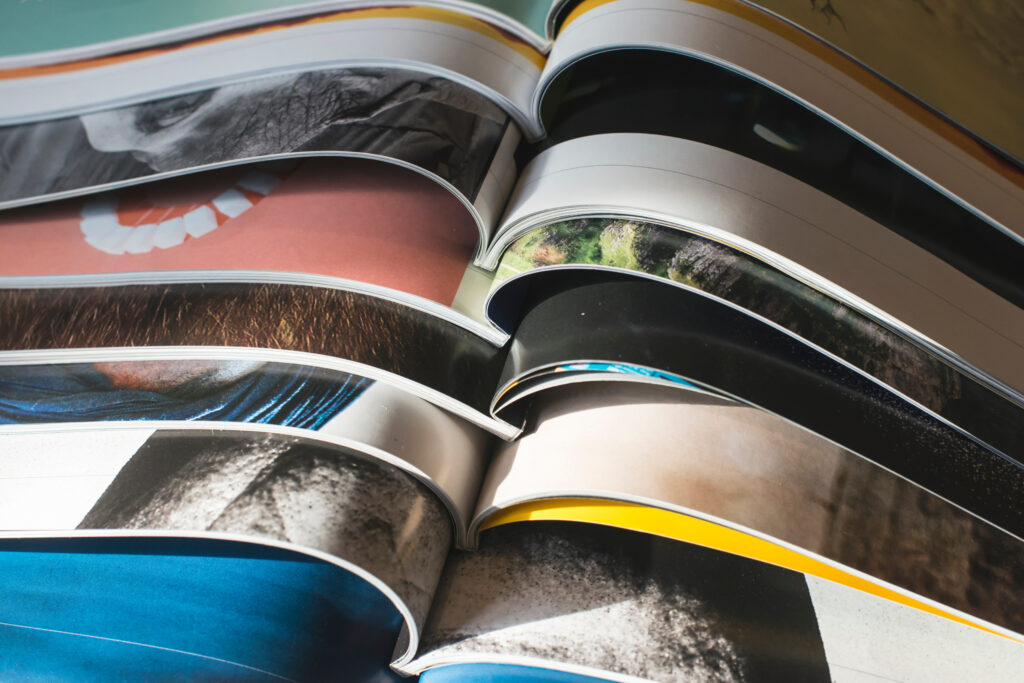
Perfect binding is more presentation focused. It gives a cleaner “book” look and is often considered for client facing copies or documents where appearance matters.
Saddle stitch
Saddle stitch is best for low page count booklets. If your document is short and meant to be handed out, it can be simpler than cerlox.
If you want help choosing the best option for your page count and use case, start with Binding or send the details for a quick recommendation when you Request a quote.
Turnaround and pickup in Hamilton and Burlington
Timelines depend on the page count, number of sets, and any finishing like covers, dividers, or splitting into volumes. If you’re on a tender deadline, the best move is to send your file and requirements early so we can confirm what’s realistic.
What usually affects timing
- whether your PDF is final and print ready
- page count and quantity of sets
- any special finishing like dividers or cover upgrades
- whether the job needs changes or layout help
If you want to avoid back and forth, use File Preparation before you upload.
Pickup options
You can arrange pickup at either location:
- Print Factory Ink Hamilton: 9 Sterling Street, Hamilton ON L8S 4H6
- Print Factory Ink Burlington: 2 4161 Morris Drive, Burlington ON L7L 5L5
Include your preferred pickup location when you Request a quote or reach out through Contact.
Request a quote | Upload files | Call
What to send for a fast quote
If you want a fast, accurate quote for cerlox bound spec books, send the details below in one message. It reduces follow up questions and helps confirm the right binding size.
Checklist
- One PDF (single file, final page order)
- Page count (total pages in the PDF)
- Final size (letter, legal, or mixed sizes)
- Black and white or colour pages (and which pages are colour, if only some)
- Number of sets (how many identical copies)
- Cover preference (clear front, heavier back, or no cover)
- Deadline (date needed by)
- Pickup location (Hamilton or Burlington)
Before you upload, it’s worth a quick check against File Preparation to avoid layout shifts, missing pages, or font issues.
Request a quote | Upload files | Call
Prefer a contact form? Use Contact.
For all binding options, see Binding.
FAQs
What is cerlox binding used for?
Cerlox is commonly used for spec books, tender sets, office manuals, and internal packages where you want a clean, practical bind that’s easy to flip and easy to organise.
Is cerlox binding durable enough for site use?
For normal handling and occasional site use, it can work well. If the binder will be opened constantly all day, every day, coil binding may be a better fit for heavy handling.
How many pages can you bind with cerlox?
It depends on paper thickness and whether you print single sided or double sided. Share your page count and paper preference and the best fit can be confirmed.
Is coil binding better than cerlox for spec books?
Coil is often better for heavy daily use and lay flat handling. Cerlox is often better when you want quick, consistent sets for tender packages and office use.
Can you bind multiple sets from one PDF?
Yes. Send one final PDF and specify the number of sets you need. If you want dividers or specific grouping, include clear instructions.
Do I need single sided printing for cerlox spec books?
Not always. Double sided printing can reduce bulk on thicker manuals. Single sided can be helpful for some markups. The best choice depends on how the book will be used.
Can you add covers or dividers?
Covers and dividers can help protect pages and make sections easier to find. If you want dividers, include the section titles and placement instructions.
Can I pick up in Hamilton or Burlington?
Yes. You can request pickup at the Hamilton or Burlington location. Include your preferred pickup location in your quote request.